A Hollywood Hills West view can be breathtaking, but not every “view home” delivers the same daily experience or long-term value. If you are searching in the hills, you are not just buying a pretty outlook. You are also buying topography, access, privacy, and a specific regulatory setting that can shape how durable that view really is. This guide will help you evaluate what matters most before you write an offer. Let’s dive in.
Start With the View Quality
In Hollywood Hills West, the word view can mean many different things. A home may offer wide city lights, a canyon outlook, a skyline angle, or a narrower framed glimpse. Research on residential views shows that view value is multidimensional, which means type, scope, distance, and surrounding visual context all matter.
That is why it helps to judge the view from the spaces you will actually use every day. A dramatic angle from one corner of a deck may photograph well, but the market usually rewards views that are visible from primary living areas and are harder to replicate. In practical terms, you want to know whether the view works from the living room, kitchen, primary suite, and main outdoor spaces.
Questions to Ask on Tour
- Is the view wide or narrow?
- Is it visible from the main living spaces or only one showcase spot?
- Does it offer daytime appeal, city lights at night, or both?
- Is the outlook framed by vegetation, or does it look onto neighboring roofs and structures?
- Does the view feel open and clean, or visually crowded?
A helpful rule is to compare the home’s everyday sight lines, not just the best camera angle. In a premium hillside market, the strongest views usually feel integrated into daily life.
Evaluate Daily Livability
A beautiful outlook is only part of the equation. In hillside Los Angeles, livability is often shaped just as much by grade, access, parking, and usable outdoor space. The City of Los Angeles hillside rules address issues like grading, off-street parking, road access, and permit conditions because these factors are central to how a home functions.
For one-family dwellings, the City requires at least two parking spaces on-site. In some situations, permits are also tied to continuous paved roadway access. That matters if you are comparing two homes with similar views but very different ease of use.
Check Access and Parking Carefully
Driveway design can make a major difference in day-to-day convenience. The Los Angeles Fire Department evaluates width, turn-arounds, turning radii, grade access points, overhead clearances, load capacity, and secured entrances when looking at access.
LAFD guidance recommends driveways at least 12 feet wide, 15 feet of vertical clearance, and less than 5 percent slope for emergency access. Even if a property is visually compelling, you should still ask how guests, delivery vehicles, and service providers reach the house.
Curb parking also deserves a reality check. In posted areas within Very High Fire Hazard Severity Zones, Red Flag Day parking is prohibited, especially on narrow roads and hairpin turns that can block emergency access. A home that feels easy for two people may feel much less convenient when you host friends or have contractors on site.
Look at Privacy as Part of the View
Many view lots are also more exposed to surrounding sight lines. Depending on the pad, street position, and neighboring decks, a view home can trade openness for privacy. That does not make it a poor choice, but it does mean privacy should be evaluated as part of the overall package.
As you tour, notice whether neighboring homes look down into key rooms or decks. Also look at how walls, screens, and planting contribute to privacy without compromising the view. In hillside settings, the best homes often strike a careful balance between openness and separation.
Test the Outdoor Space
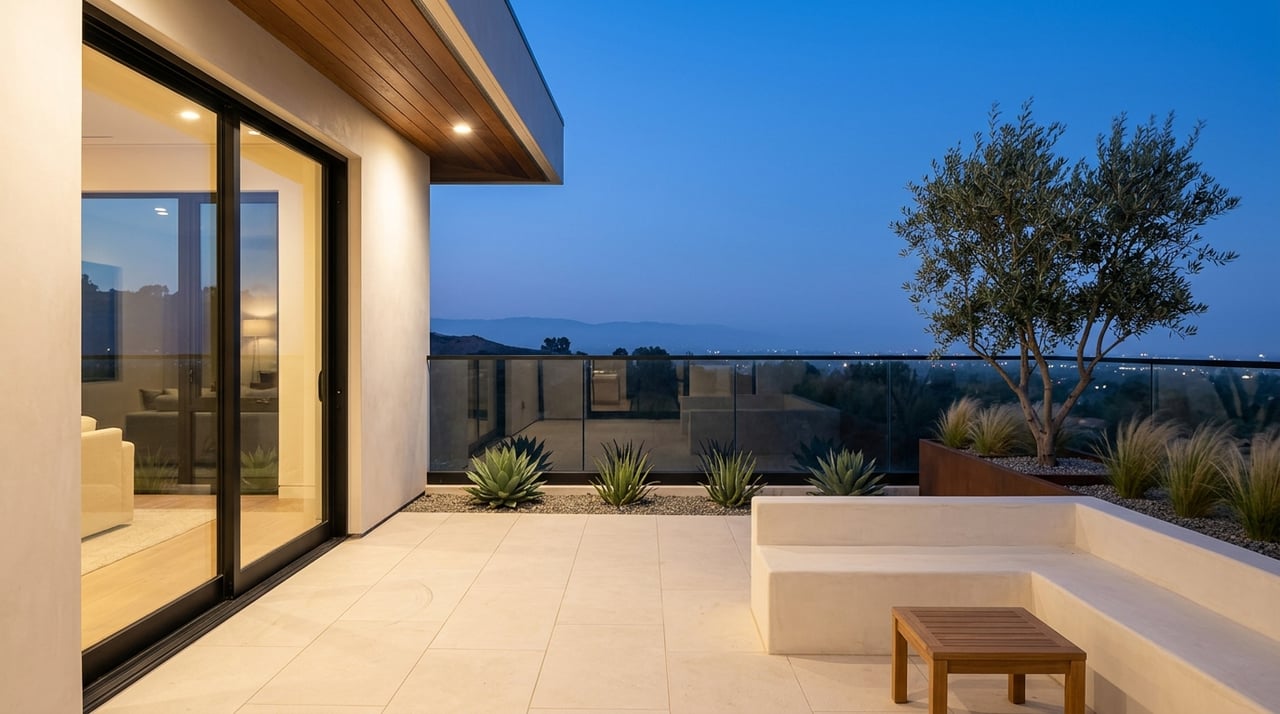
Outdoor square footage is not equally usable just because it exists on paper. A large deck may sound appealing, but steep exposure, wind, and close neighboring sight lines can change how often you actually use it.
Try to judge whether the outdoor space feels comfortable for dining, lounging, or entertaining. A smaller terrace with better privacy and easier access can be more valuable in daily life than a larger but awkward deck.
Think About View Durability
A key question in Hollywood Hills West is not just whether a home has a view today. It is whether that view is likely to remain meaningful over time. Research on view pricing suggests that scarcity and permanence matter more than a simple yes-or-no label.
That means you should ask what protects the current outlook. In some cases, topography helps. In others, setbacks, neighboring elevations, or corridor rules may support the view’s durability.
Understand Mulholland Scenic Parkway Review
The City of Los Angeles has hillside regulations intended to protect panoramic views, and the Mulholland Scenic Parkway has additional rules focused on preserving views from Mulholland Drive. If a property is within or visible from that area, projects may be subject to viewshed protection and visibility studies.
The Mulholland guidelines are designed to preserve scenic views and the natural hillside character of the Parkway. They also state that landscaping should not penetrate the viewshed as plantings mature. For a buyer, that makes it important to ask whether the parcel falls within this review context and how that might affect future changes nearby.
Ask What Could Change the Outlook
Even a strong current view can be affected by neighboring construction, mature landscaping, or site alterations. During your diligence, ask whether the existing view is protected mostly by geography or whether it depends on conditions that could shift over time.
You should also look closely at retaining walls, terraces, and grading that may have been created to capture the view. The City’s hillside guidance points to geotechnical reports and more rigorous analysis on steep slopes, so it is smart to confirm that substantial site work is supported by permits and plans.
Review Safety and Disclosure Issues
In Hollywood Hills West, wildfire exposure and access are not side issues. They are core parts of how you evaluate a hillside property. LAFD states that the Very High Fire Hazard Severity Zone covers most hilly and mountainous parts of Los Angeles, and AB38 requires disclosures for residential property in that zone.
Before you move forward on a home, verify the parcel’s fire zone status and review brush clearance conditions. These details can affect both your comfort level and the practical demands of ownership.
Key Safety Checks Before an Offer
- Verify whether the parcel is in a Very High Fire Hazard Severity Zone.
- Review any available AB38-related disclosure materials.
- Confirm current brush clearance status.
- Ask for soils, grading, drainage, and retaining-wall records.
- Review whether the street frontage or access conditions could affect future alterations or rebuilding.
LAFD brush clearance guidance also calls for vegetation maintenance within 200 feet of structures and within 10 feet of combustible fences or roadways and driveways used for vehicle travel. For hillside buyers, this is part of understanding the real maintenance profile of the property.
Consider Emergency Access as Ownership Reality
It is easy to focus on the architecture and the sunset angle, especially in a neighborhood known for elevated homes and cinematic views. But emergency access should be treated as an everyday ownership issue, not just a technical note in disclosures.
If the home sits on a narrow or substandard hillside street, ask whether additional access approvals could affect future remodeling or rebuilding. A beautiful view home can still come with constraints that matter later.
Compare Homes Like a Local Expert
When you compare two view homes in Hollywood Hills West, resist the urge to reduce the decision to price per square foot or the listing’s best photo. In this part of Los Angeles, value is often created by a combination of view quality, privacy, access, parking, and durability.
A home with a slightly less dramatic view may be the stronger choice if it offers better daily-functioning spaces, easier arrivals, more usable outdoor areas, and a more stable outlook over time. This is where a design-aware, local evaluation becomes especially valuable.
A Smart Comparison Checklist
- View from living room, kitchen, and primary suite
- Daytime outlook versus nighttime city lights
- Privacy from neighboring homes, decks, and streets
- Driveway width, slope, and turning ease
- Realistic guest parking and service access
- Outdoor space comfort and usability
- Fire zone status and brush clearance demands
- Evidence that grading, terraces, and retaining work were properly documented
- Whether Mulholland or hillside review rules shape future changes
The goal is to understand not only how the home looks on tour, but how it lives over time.
If you are weighing a view property in Hollywood Hills West, it helps to look past the headline and study the full picture. The most compelling homes are usually the ones where architecture, site planning, access, and outlook work together in a way that feels both beautiful and practical. If you want a local, design-minded perspective on evaluating a hillside home, Joseph Kiralla can help you assess the details that matter.
FAQs
What should you look for in a Hollywood Hills West view home?
- Focus on the quality of the view from main living spaces, along with privacy, access, parking, outdoor usability, and how durable the outlook appears over time.
How do Mulholland Scenic Parkway rules affect Hollywood Hills West homes?
- If a property is within or visible from the Mulholland Scenic Parkway area, projects may be subject to viewshed protection and visibility studies intended to preserve scenic views and hillside character.
Why does driveway access matter for a Hollywood Hills West property?
- In hillside areas, access affects daily convenience and emergency response, and LAFD evaluates factors like width, turn-arounds, turning radii, grade, overhead clearance, and entrances.
How important is wildfire zone status for a Hollywood Hills West home buyer?
- It is a major factor because much of hilly Los Angeles falls within the Very High Fire Hazard Severity Zone, and residential properties in that zone are subject to disclosure requirements under AB38.
What records should you request for a Hollywood Hills West hillside home?
- Ask for soils, grading, drainage, and retaining-wall records, especially if the home sits on steep terrain or includes terraces, major site work, or imported fill.