If you are shopping in Los Feliz, you are not just choosing square footage or a street. You are choosing a design language, a floor plan philosophy, and a relationship to light, landscape, and history. For design-minded buyers, that matters, and Los Feliz offers one of the richest architectural mixes in Los Angeles. Let’s dive in.
Why Los Feliz stands out
Los Feliz has an unusually layered residential character. SurveyLA identifies the Los Feliz Heights Residential Historic District as a highly intact hillside area with about 317 single-family homes built from 1920 to 1949, many in Period Revival styles like Spanish Colonial, Mediterranean, Tudor, and American Colonial.
That hillside setting shapes the way the neighborhood feels. Curving streets, sloped lots, and broad views create a strong sense of place, which is one reason architecture reads so clearly here.
The style mix is not limited to single-family homes. Along Los Feliz Boulevard, SurveyLA also identifies a multi-family residential historic district with apartment houses, courtyard apartments, and garden apartments built from 1920 to 1969, including Spanish Colonial Revival, Mid-Century Modern, and Minimal Traditional buildings.
Los Feliz also has a notable design pedigree. Hollyhock House on Olive Hill, Frank Lloyd Wright’s first Los Angeles commission, helps frame the neighborhood as a place where architectural identity is part of daily life, not just a backdrop.
Spanish Revival in Los Feliz
For many buyers, Spanish Revival is the style that first comes to mind in Los Feliz. It is warm, textured, and deeply tied to the architectural history of Los Angeles.
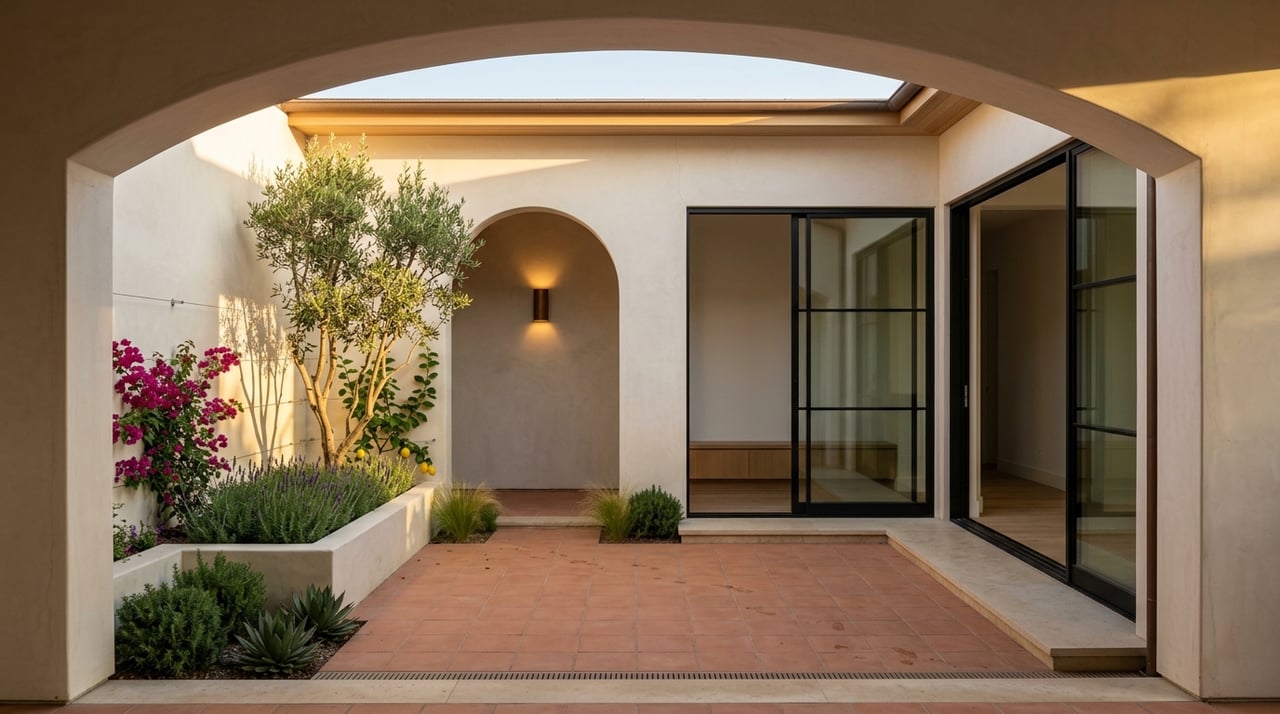
Los Angeles preservation documents describe Spanish Colonial Revival homes as typically one or two stories with stucco exterior walls, low-pitched tile roofs, recessed openings, decorative ironwork, and patios, courtyards, or balconies. These homes often use a rectangular plan, though larger examples can become more asymmetrical and layered.
In day-to-day living, that usually means a more sequence-driven layout. Instead of one big open volume, you often move through a series of defined spaces, from entry to formal rooms to outdoor rooms, with courtyards and patios acting as transitions.
That pattern appeals to buyers who like privacy, atmosphere, and a strong sense of arrival. If you value handcrafted detail and rooms that feel distinct rather than interchangeable, Spanish Revival may feel especially satisfying.
A local Spanish Colonial example
A strong local example is the J.W. Blank Residence at 1950 N. Edgemont Street. The City of Los Angeles describes it as a 1927 Spanish Colonial Revival home with an irregular plan, stucco finish, multiple red clay tile roof forms, a porte-cochere, corbeled arches, tile details, decorative ironwork, and exposed wood trusses and cornices inside.
That description captures what many design-minded buyers love about the style. The appeal is not just curb appeal. It is the layering of materials, the depth of openings, and the way interior and exterior details work together.
What to look for in respectful updates
If you are considering a restored or renovated Spanish Revival home, focus on whether its core character still reads clearly. The National Park Service guidance emphasizes repairing historic features when possible and matching original design, color, texture, and materials when replacement is necessary.
In practical terms, the most compatible updates usually preserve stucco texture, clay tile roof profiles, arches, ironwork, wood windows and doors, and courtyard walls. Oversized openings or additions that flatten the original massing can change the character quickly.
Mid-Century Modern in Los Feliz
If Spanish Revival is about texture and sequence, Mid-Century Modern is about openness and flow. For buyers who want everyday ease with a strong design identity, this style often feels immediately livable.
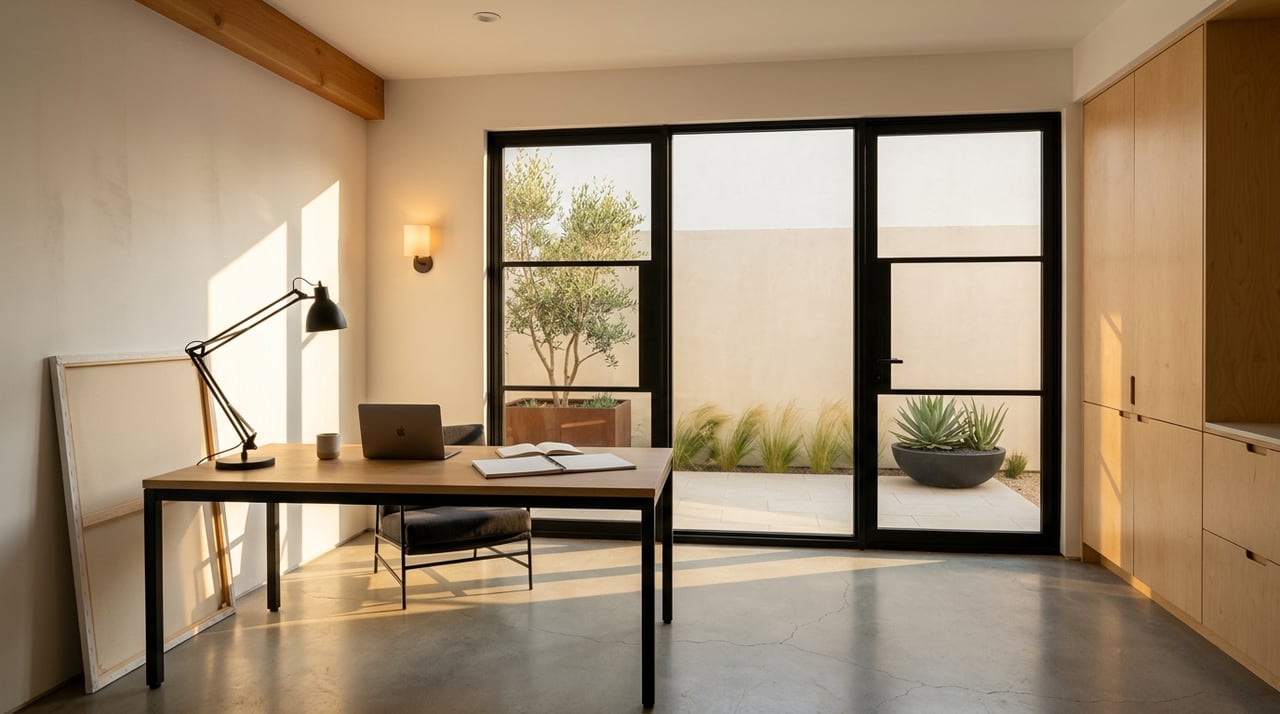
Los Angeles preservation plans describe Mid-Century Modern as a postwar style defined by open floor plans, ample windows, and a goal of bringing the outdoors in. Common features include post-and-beam construction, split-level planning, and large glass openings.
That translates into a lighter, less formal feeling than earlier revival styles. You often get longer sightlines, more daylight, and spaces that connect more directly to patios, decks, or gardens.
A local Mid-Century example
The Sam and Jane Taylor House at 3247 Waverly Drive shows these qualities clearly. It is a 1947 one-story residence with an irregular plan, sliding glass doors, open living spaces, skylights, built-ins, and a landscape package that originally included a pool and outdoor support structures.
For a design-minded buyer, those details matter because they point to how the house was meant to function. Built-ins, skylights, and sliding glass doors are not just aesthetic choices. They shape how the home feels every day.
Why the hillside setting helps
Los Feliz’s topography reinforces the appeal of Mid-Century and modernist homes. The Los Feliz Heights district is defined by hillside lots, curving streets, and city-view conditions, which are well suited to houses that prioritize decks, glazing, and a strong connection to site.
If you want a home that captures light, frames views, and feels tied to the landscape, Mid-Century homes in Los Feliz often deliver that experience in a very direct way.
What to look for in respectful updates
For Mid-Century homes, the best updates usually preserve the structural rhythm and the original relationship between glass and outdoor space. National Park Service guidance recommends preserving floor plans and other character-defining interior spaces, while avoiding changes that diminish original windows, beams, openings, and circulation patterns.
When you tour a home, pay attention to whether original window proportions remain intact. Also look for preserved built-ins, millwork, and visible post-and-beam logic. Those details often tell you whether an update was thoughtful or simply cosmetic.
Contemporary homes in Los Feliz
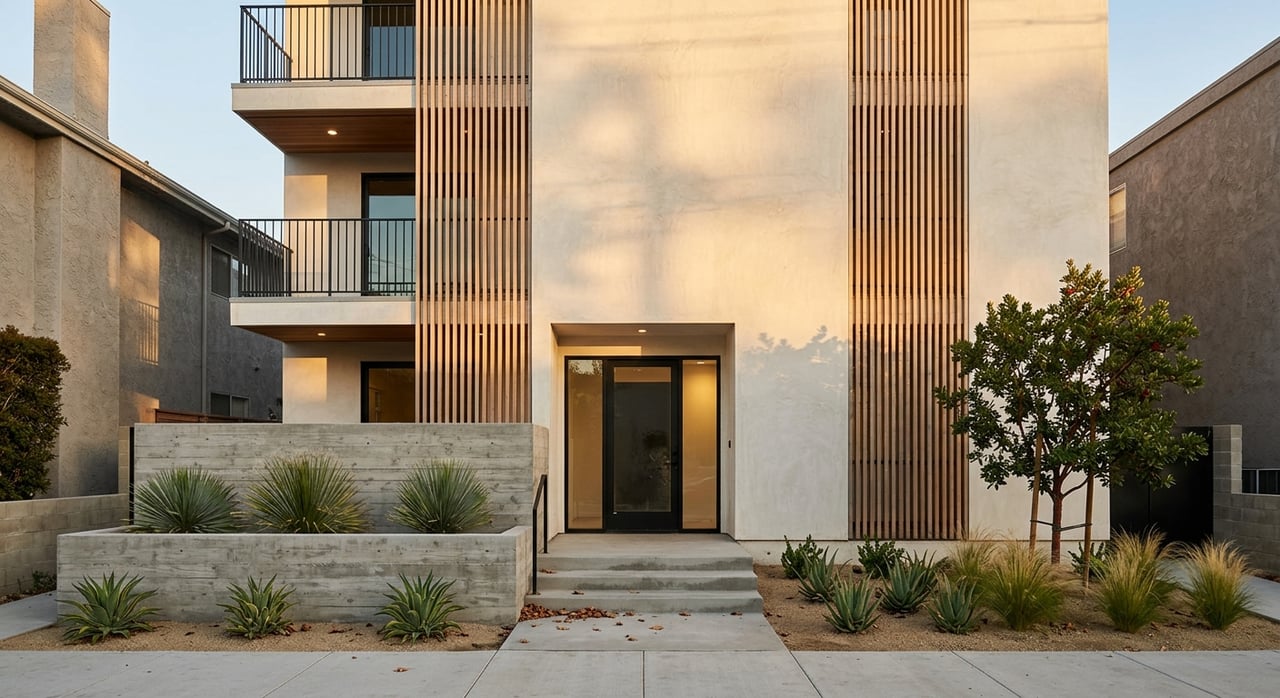
Not every design-minded buyer wants a house that feels tied to a historic period. In Los Feliz, Contemporary homes offer a cleaner, less decorative approach that can work especially well on steep or view-oriented lots.
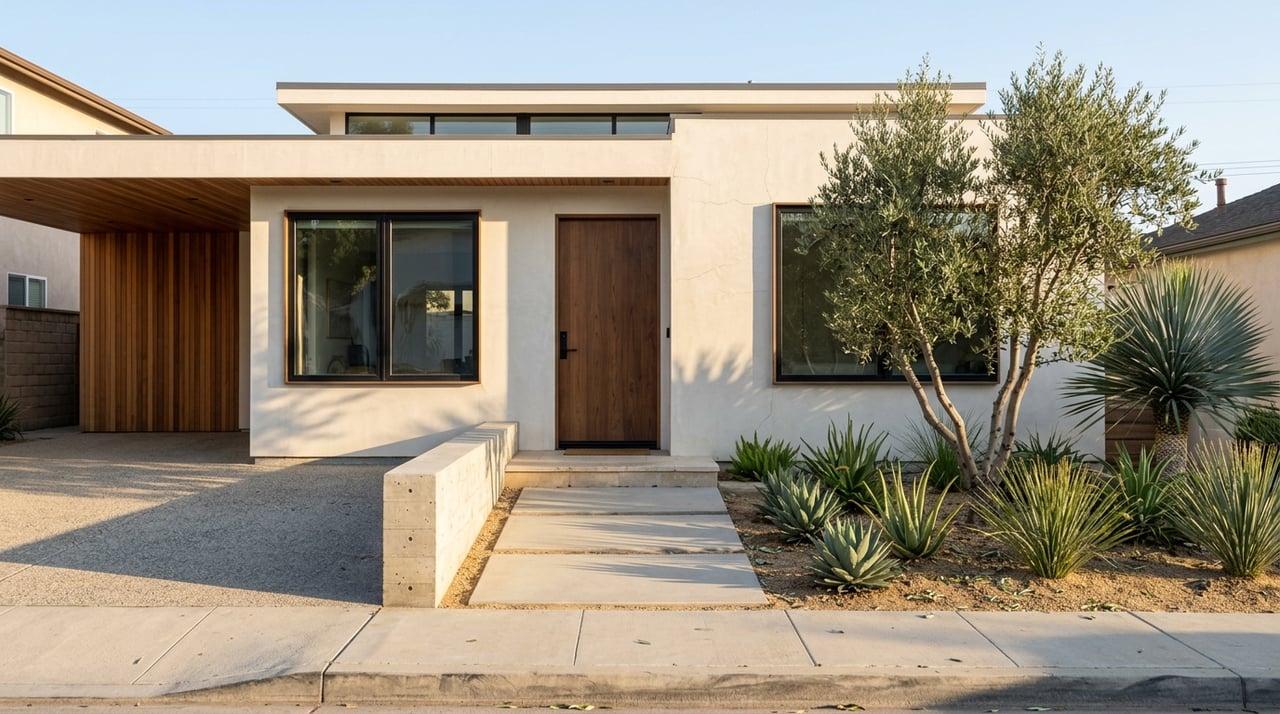
Los Angeles preservation plans describe Contemporary homes as postwar designs with simple rectilinear plans, low-pitched or flat roofs, generous plate glass, sliding or metal casement windows, clean profiles, and exposed posts. Many are ranch-derived or borrow features from Mid-Century Modern.
In daily life, that often means simpler detailing, larger openings, and spaces that adapt more easily to current lifestyles. If you prefer a quieter architectural envelope and want the site, light, and layout to do most of the work, Contemporary homes can be a strong fit.
How to judge the bones
With Contemporary homes, simplicity is the point. That means the best houses usually have clear rooflines, consistent glazing, and a strong connection to landscape rather than lots of decorative add-ons.
The main risk is overcomplication. Faux-historic trim, heavy ornament, or mismatched replacement windows can dilute the original design intent.
When you evaluate a Contemporary property, look at proportion first. If the roofline, openings, and indoor-outdoor flow still feel disciplined and coherent, the house may have strong bones even if finishes need updating.
How to choose the right style
A good design fit is not only about what looks best in photos. It is about how you want to live.
If you want defined rooms, courtyard transitions, and visible handcrafted detail, Spanish Revival is usually the strongest match. If you want openness, light, built-ins, and seamless indoor-outdoor living, Mid-Century Modern often fits better.
If you want cleaner lines, larger glazing, and a more minimal envelope, Contemporary may be the clearest choice. Each style can be compelling, but each asks something different of daily life.
What to check before you make an offer
Before making an offer on a design-forward home in Los Feliz, it helps to look beyond finishes. Preservation guidance treats plan shape, window and door proportions, roof profile, and the survival of original materials as character-defining features.
That makes a simple pre-offer checklist useful:
- Look at the overall massing and roof form
- Check whether window and door proportions feel original to the style
- Note whether key materials still appear intact
- Pay attention to built-ins, beams, ironwork, tile, and other integrated details
- Study how the house connects to patios, courtyards, decks, or landscape
These are often the details that separate a house with lasting design value from one that has only been lightly staged for appeal.
Historic district review matters
If a property is inside a local historic district or HPOZ, exterior work may be subject to additional review. Los Angeles City Planning notes that landscaping, alterations, additions, and new construction can require review, while some routine work, such as window maintenance or replacement, stucco maintenance, and re-roofing, may be handled through administrative clearance.
For buyers, this does not have to be a drawback. It simply means you should understand the review context before planning major exterior changes.
In a neighborhood like Los Feliz, that kind of clarity can help you protect both the design integrity of the home and your renovation expectations. If you want guidance on identifying strong architectural bones, understanding style fit, or getting access to thoughtfully curated opportunities in Los Feliz, connect with Joseph Kiralla.
FAQs
What home styles are most common for buyers in Los Feliz?
- Los Feliz includes a mix of Spanish Colonial Revival, Mediterranean, Tudor, American Colonial, Mid-Century Modern, Minimal Traditional, and Contemporary homes, with especially strong representation in hillside historic districts and along Los Feliz Boulevard.
What makes Spanish Revival homes in Los Feliz appealing to design-minded buyers?
- Spanish Revival homes often appeal to design-minded buyers because they combine stucco walls, clay tile roofs, arches, ironwork, and courtyards with defined rooms and a strong sense of character.
What should buyers look for in a Los Feliz Mid-Century Modern home?
- Buyers should look for open floor plans, large windows, indoor-outdoor flow, preserved built-ins, original window proportions, and visible structural features such as post-and-beam elements.
How can buyers evaluate Contemporary homes in Los Feliz?
- Buyers can evaluate Contemporary homes by focusing on roofline clarity, proportion, glazing, indoor-outdoor connection, and whether later changes respect the home’s original simplicity.
What should buyers know about historic district rules in Los Feliz?
- Buyers should know that if a property is in a local historic district or HPOZ, exterior changes such as additions, landscaping, and alterations may require additional City review, while some routine work may qualify for administrative clearance.